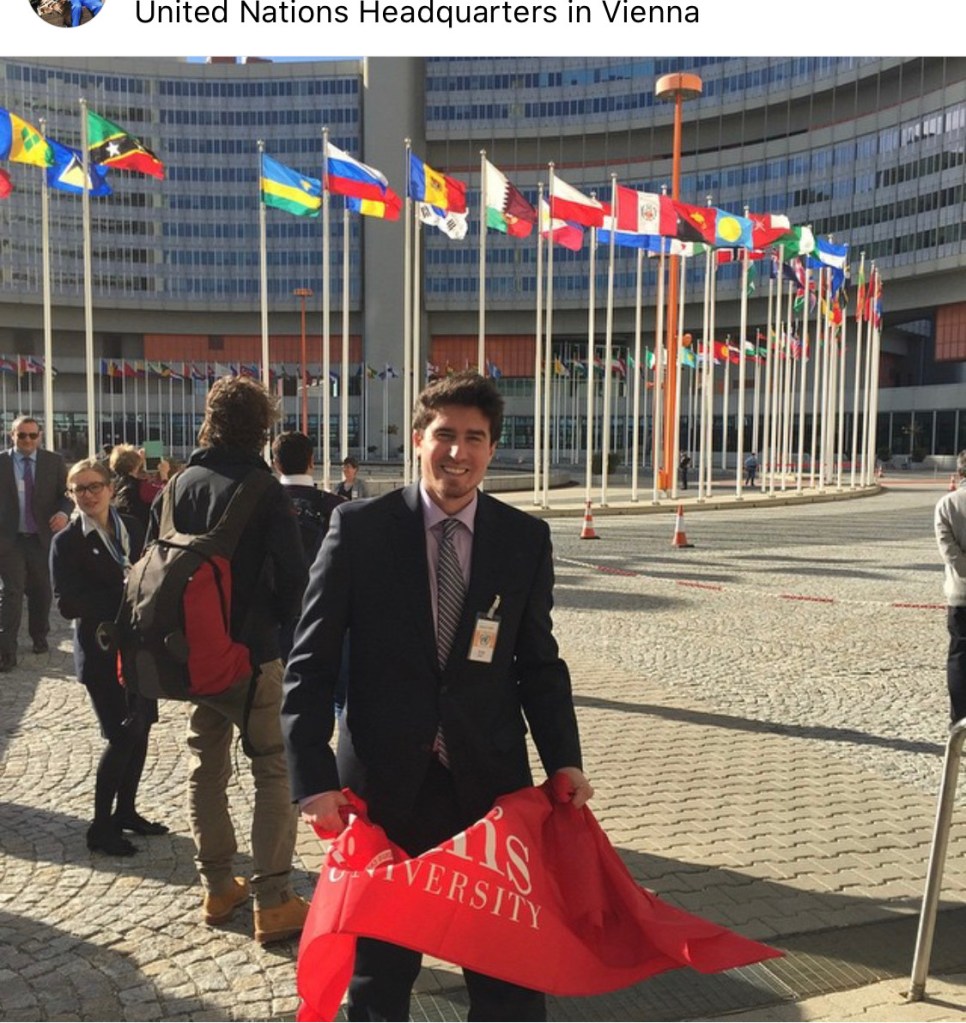
Part I of this series focused on how I started my career as a law school staffer and advice for those seeking to break into this field at the entry level. Part II is focused on what I recommend you do once you get there. Looking back on June 2014-April 2015, a couple themes emerged that I hope will be helpful to junior staffers as they begin their climb through the ranks of higher education administration. The most important is that I found the sweet spot for what I liked doing, what others thought I was good at doing, what more qualified people wouldn’t necessarily want to do, and that added value. When advising junior staffers, I tell them to figure out what this is for them and embrace that activity.
A Seed is Planted
Right before I transitioned from a part-time fellow to a full-time director in summer 2014, I was invited to Rome for a conference as a late addition. The conference program added a pretty important event and more hands were needed for a variety of student, alumni, and guest activities. This was my first real work travel, and it highlighted to me that I could basically go anywhere on short notice; I enjoyed interacting with high-level officials, faculty, students, alumni, and other guests; and that work others (including those with a J.D.) may consider non-glamorous didn’t really bother me (in middle school & high school I worked in catering). It took another year before I fully connected the dots (part III: Go East, young man!), but looking back, this trip planted the seeds for a lot of what has happened in the last 7 years because I started looking beyond the job I had on a paper into the activities I could take on.
The Sweet Spot for Junior Staffers
You may have stumbled across a diagram like this one to help you find your purpose:
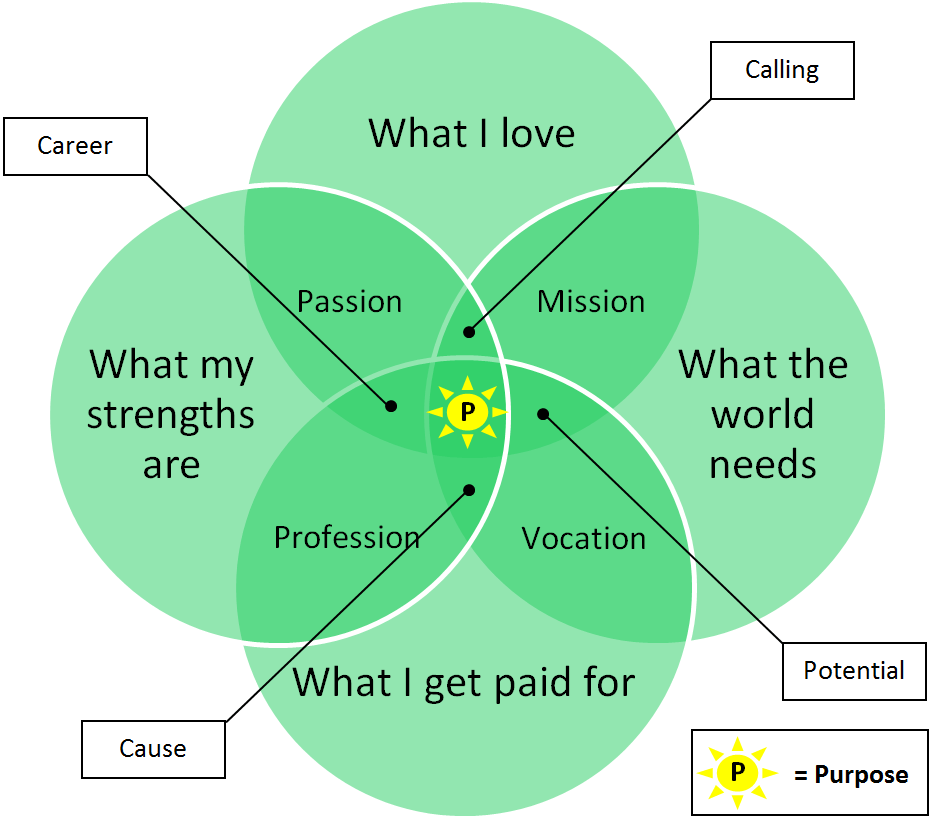
While I like this one for the current stage in my career, I think it misses a key point for junior staffers. We have to navigate a lot as we enter higher education administration and may not necessarily do the things we love or things the world needs. When giving advice, I suggest that junior staffers focus on (1) what they think they’d like to do for a career; (2) what is revenue generating (or used by your university in marketing); (3) what high-level administrators get positive feedback for being done by alumni, faculty, and students; and (4) what people more qualified than you either can’t or won’t do. I use this framework because this is how I am where I am today (literally and figuratively).
The 18 Months that Changed My Life (Part I)
After the Rome trip, I returned to begin the 2014-15 year. I instructed/co-instructed 12 credits of coursework as an adjunct professor of law while serving as a full-time director. Year 2 felt even more like law firm work in terms of hours as I navigated work across departments.
- I got my first taste of recruitment as we launched a program for J.D. applicants interested in international law. I loved getting to chat with 0Ls as they were deciding between schools, reading personal statements, and planning activities.
- I was given my first solo work trip, meeting our J.D. students based in Europe and having meetings at international organizations. I realized that not everyone was able to go anywhere on a moment’s notice, that I was fine with economy travel and layovers, and my background meant I tried to be frugal when spending money on the trip.
- When I said in Part I that an amazing boss makes all the difference, I mean it 100%. I was offered an opportunity to attend a conference with representatives from two important international organizations to discuss our programs. In addition to the study abroad portion (why I was there), the event exposed me for the first time to the administrative world of Non-J.D. programs. Up until that point I was focused on student services for LL.M. students and assisting J.D. students with working abroad. I was a very junior staffer and knew almost nothing about LL.M. recruitment and global partnerships, but the conference attendees were generous with their time and so kind to me. Two people who probably forgot our encounter left a mark by taking time to chat with someone very clearly outside his element. My unconditional willingness to chat with anyone entering our line of work who asks is based on those encounters.
Realizing You Can’t Do It All
As I balanced a full teaching load and work across multiple departments, I realized I was not going to be able to keep up the work I was doing. I needed to reduce my teaching load, and focus on a specific area of higher education work. I realized that while many people want to be a professor, law school administration was a much more stable path for someone like me. Even with a very supportive environment, I had trouble declining work, saying when I had too much on my plate, or needing help. This was the hardest skill for me to learn and something I caution people early in the careers to work on. Good bosses in higher education will be happy you’re sharing these concerns and work with you to improve on them.
I assessed my strengths and weaknesses and found my sweet spot: in addition to loving travel (who doesn’t?!), I was good at making connections with students and recruiting people to law school. By Spring semester of year two I had already been a listed instructor or co-instructor (aka professor) for 9 courses. The preceding 10 months made me realize I could build a career in international recruitment, institutional partnerships, and the globalization work that law schools were focused on.
 Beyond Non-JD | by Joshua Alter
Leave a reply to Origin Stories Part III: How I Ended Up Working at Law Schools Instead of as a Lawyer – Beyond Non-JD Cancel reply