I have enjoyed teaching Legal English for American Law Schools (LEALS) again over Summer 2022. As we prepare for the final week of the course, I write to share that any law school outside the U.S. can set up a course like LEALS. And I highly recommend doing so for a number of reasons!
- Cost: You can save your students thousands of dollars by offering a course through your law school.
- Internationalization: A course like this (if done at the university-to-university level can lead to a deeper connection between law schools for things like conferences, exchanges, and visiting scholars).
- Marketing: You can market courses like this to help you attract students, as it is seen as a gateway to future study in the United States.
- Head Start: Courses like LEALS can really help students understand the U.S. law school experience and application process and help them get a head start for succeeding in a U.S. law school.
Considerations for Law Schools Outside the United States
- Look to Your Partner Schools. These MOUs should be mutually beneficial, and you can ask your American law school counterparts to offer a similar course. There are a number of faculty, alumni, and staff (as adjuncts) who would be suitable to teach courses like these, and some would be very happy to do so. Without the need to travel, I believe it has become even easier to set up courses like LEALS!
- Create a Course That Works Best For You. You will know your school’s needs and goals better than I will. LEALS was created to prepare students for U.S. law school study and is roughly 1/3 introduction to U.S. law, 1/3 introduction to U.S. legal analysis, and 1/3 introduction to U.S. law school experience. You may want a course more focused on the U.S. legal system or on legal writing. You may have a really prominent specialty and instead prefer a course on the U.S. law on that subject. The point is that you don’t need to copy LEALS (though I attach the syllabus below if you’d like). Instead, create a course that will best serve your school and students.
- Plan. Advanced planning goes a long way to ensuring the success of a course. We plan months ahead of time. Why? Ensuring the students most likely to benefit are able to enroll. Ensuring the course is already part of the schedule when students choose courses, internships, and other activities to avoid conflicts. And other important considerations.
- Repeat. Institutionalizing a course can present a really wonderful advantage. In the case of LEALS, ECUPL students are able to ask their classmates who took prior versions about their experiences. ECUPL students can lean on former students who enrolled in J.D. and LL.M. programs for advice. We can set up alumni panels to talk about how the course helped them in their careers. And much more. Look to see if a course has the potential to be more than a one-off. It can be a great opportunity to make the course a long-term fixture at your school, even if the instructor changes.
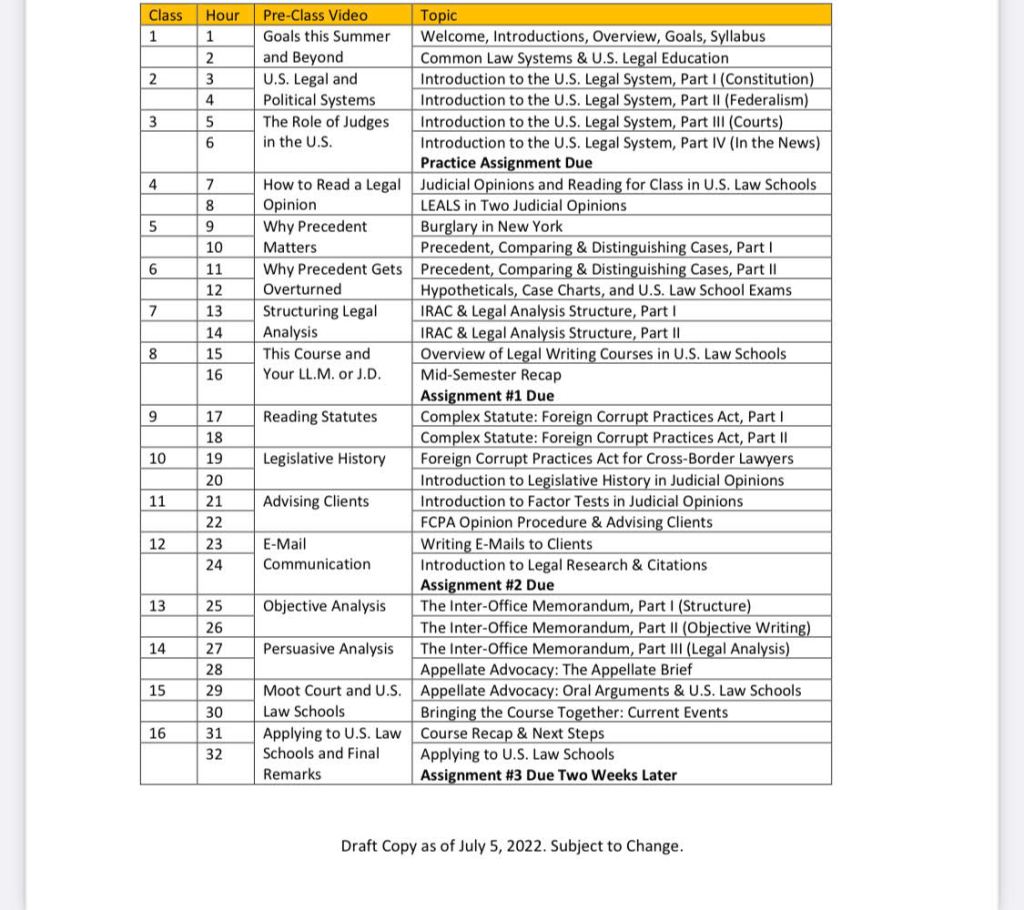
 Beyond Non-JD | by Joshua Alter
Leave a comment