In Week 1, my students focused on common law, precedent, and stare decisis. In Week 2, we shifted to federalism, separation of powers, and constitutionality. I’ve been incorporating current events and locations into the course, and it’s been interesting to talk about/prepare to talk about common law/civil law distinctions from New Orleans, discuss federalism issues related to migration from Houston, and tribal sovereignty from Oklahoma City. Given my students’ backgrounds in corporate law, the Twitter/Elon Musk case made an appearance last night and we discussed Delaware’s court system in that context. And the post-Dobbs landscape has helped students understand stare decisis, executive orders, and state court review of constitutionality.
For Week 2, I visited four States for the first time: Alabama, Mississippi, Louisiana, and Texas. In Houston, I was able to visit the University of Houston Law Center, where I reunited with former St. John’s Law colleagues and finally met (in-person) my counterpart at UHLC. It was a lot of fun visiting their campus, seeing their brand new building being finished (opening soon), and talking about foreign lawyers in U.S. law schools.
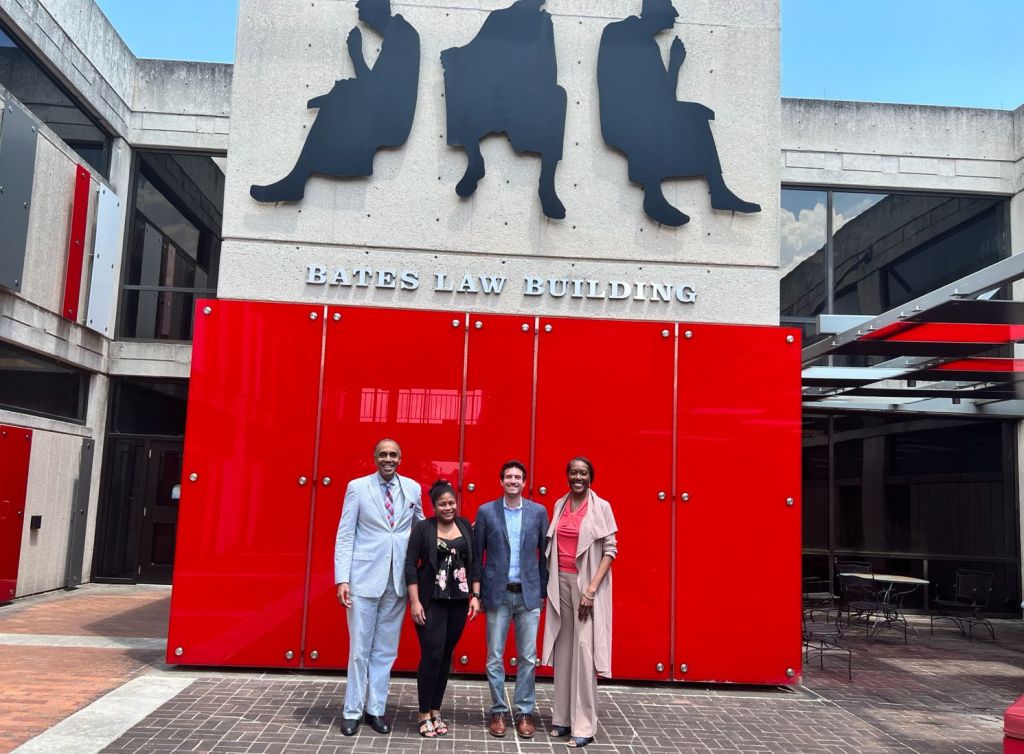
In addition, I’ve been learning so much about America during my visits in each city and state. I was excited to add a history component to LEALS, given how much we speak about U.S. law and politics. Researching and visiting attractions in each state before class really helps me tie our discussions to historical and current events to help my students better understand the material we are covering.
For those working on online courses for students abroad, whether privately or through a partner school relationship, here are some updates for LEALS Summer 2022, in case they are helpful as you build your courses:
- Before each class, I send my students a pre-class audio (usually about 5 minutes) highlighting the reading materials and foreshadowing what we’ll cover in class. This is my first time incorporating pre-class audio and the feedback has been quite positive. Students enjoy the extra listening practice, and have shared that these recordings have been helpful as they prepare for and participate in class.
- Rather than set office hours in the syllabus, I asked the students when would be the time they’d be most likely to meet with me if they had questions. They chose Saturday nights! Which is Sunday morning my time. We had a great turnout in the first office hour, and using their preferences and schedules as the starting point has benefited all. It’s been a bit more complicated as I travel across time zones, but these engagements outside class are really valuable.
- Since we focus on legal English for courts/judicial systems in one of the early lessons, the state-by-state travel has opened up a great comparison of the different state and federal courts wherever I go. This has been especially insightful at the state level, where students have learned a little bit about what makes state court systems different, and the legal English to discuss these topics.
- I was able to shift from 4 periods once a week to 2 periods twice a week. Although it requires more availability (for the students and me), I’ve seen how effective smaller chunks of class time are, especially in a second language. Due to the nature of courses abroad, you may be asked for condensed or intensive courses. I’d highly recommend stretching out the course as long as you can (based on your schedule, the students’ schedules, and the school’s goals), as students have more time to prepare, more ability to stay engaged the entire class, and a longer experience in your course.
- Because we keep the course capped, the students have so many chances to stay engaged. One example: each student has the option to make a 5 minute presentation to their classmates during the course. The times filled up almost immediately (even though it is optional) and the students who have presented so far have done an amazing job. They’ve taken so much pride in their planning and presentation, and it’s been great to have them practice their speaking in another way. Without the ability to engage in the classroom, I’ll continue looking for creative outlets for the class.
 Beyond Non-JD | by Joshua Alter
Leave a comment