When I say that the International Legal Education Abroad and LL.M. Administrators Conference (ILEAC) changed my life, I’m not exaggerating. A shift in career focus, a 2.5 year stint in China, and my lateral move in 2019 would not have happened if I had not attended ILEAC in 2015.
I shared some information about this last summer during my series on my career. The short version:
When I said in Part I that an amazing boss makes all the difference, I mean it 100%. I was offered an opportunity to attend a conference with representatives from two important international organizations to discuss our programs. In addition to the study abroad portion (why I was there), the event exposed me for the first time to the administrative world of Non-J.D. programs. Up until that point I was focused on student services for LL.M. students and assisting J.D. students with working abroad. I was a very junior staffer and knew almost nothing about LL.M. recruitment and global partnerships, but the conference attendees were generous with their time and so kind to me. Two people who probably forgot our encounter left a mark by taking time to chat with someone very clearly outside his element. My unconditional willingness to chat with anyone entering our line of work who asks is based on those encounters.
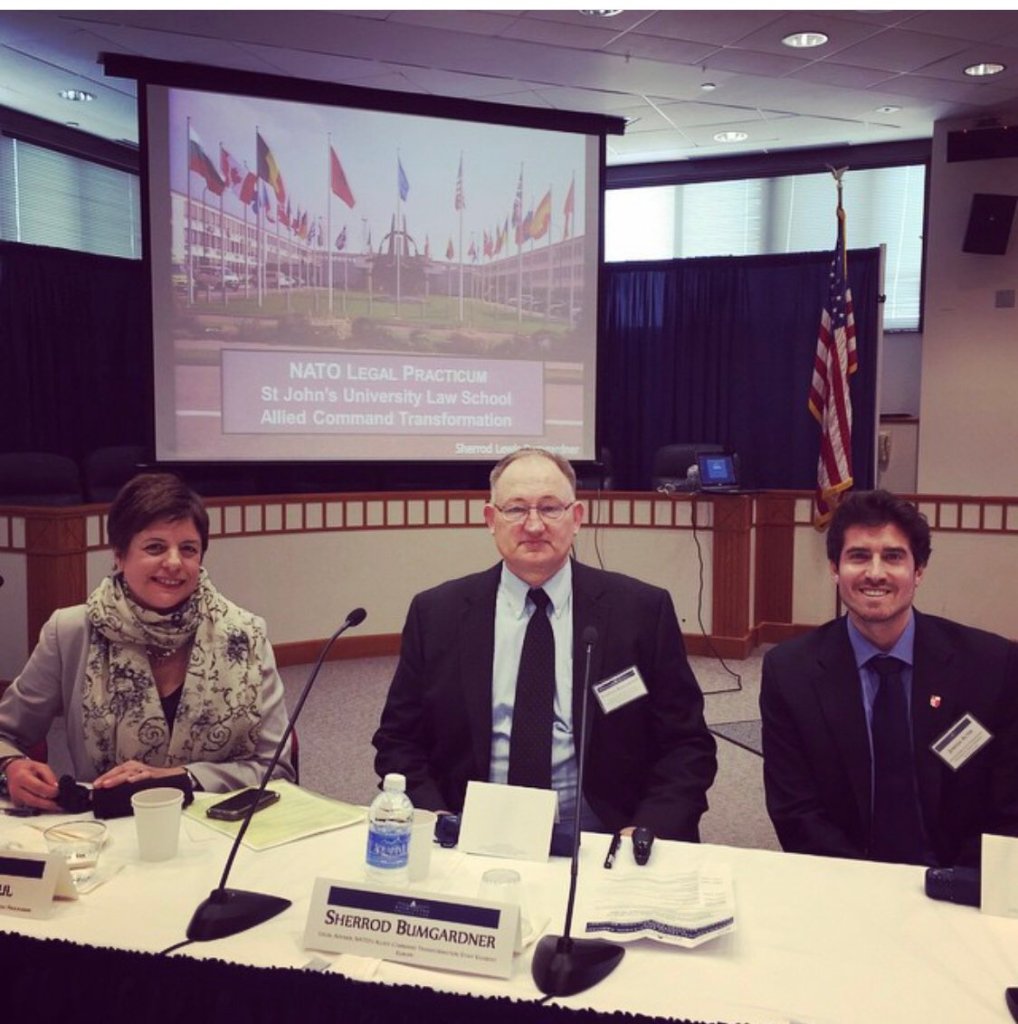
Life came full circle yesterday! I was able to share advice with colleagues in a session on Professional Development, Career Progression, and Law School Staff Work: Advice for Junior Colleagues. What made it more special for me: I co-presented with one of the two people I referenced above (Theresa Kaiser, who was at American and ran ILEAC in 2015) and another who was an important confidant when I was thinking about moving jobs (Olivera Jovanovic).
What I loved about our conversation yesterday: we highlighted many topics that I wish I had heard about earlier in my career. Some of my main takeaways/thoughts:
- So many of the important moments in my career happened on the road, at conferences, forums, and fairs. Junior professionals may not have been able to build these formal and informal networks over the last 2+ years. I worry that law schools will be less willing to send junior staff on the road for conferences and recruitment in 2022-23 and possibly beyond, especially now that we’ve seen the success for engagement and recruitment virtually. So I think it’s important for junior staffers to meet more experienced professionals virtually or locally when possible. ILEAC is a great way for those in the international programming/LLM space.
- I’ve always tried to think (at least) 1 or 2 steps ahead in my career and pay attention to where legal education and Non-JD programming are headed. That’s helped me at both schools where I’ve worked and in thinking about my own plans. I think that residential LLM programs for foreign-educated lawyers will play a smaller role in Non-JD shops and shared advice about upskilling and other areas I recommend colleagues focus on. While I don’t think LLM programs are going away, I think career progression at most law schools (e.g., the Director level and above) will be easier for those junior colleagues getting involved in the full suite of graduate, online, and non-degree programs.
- Uncomfortable conversations are difficult, but I hope we provided some guidance on things like compensation, flexibility, benefits, promotions, and how to best advocate for yourself. Some of the tougher truths are (1) that you may need to leave your current job to move up; (2) other industries may now offer better packages and flexibility than higher ed; and (3) you may need to lean on people outside your school to really assess how your compensation stands up.
- We work in these heavily student-facing roles because we care. But that can be a double-edged sword, especially in an industry that thrives on “doing more with less.” Even before the pandemic these roles required a lot of nights and weekends and considerable emotional and mental strength as we assisted students. Burnout and demoralization are real (see this recent interview on Inside Higher Ed) and it is more important than ever to establish boundaries (Inside Higher Ed once again!).
Those interested can learn more about my career progression in a five-part series here.
 Beyond Non-JD | by Joshua Alter
Leave a comment