Having read The Odyssey as an undergrad, I should have been more focused on my repatriation to the U.S. than I was (Part III in the series highlights my work move to China). But while I spent a lot of time preparing to move abroad, I didn’t really think about what it would be like to return. After all, I was returning to New York and to the same job. I had been back in the U.S. multiple times while I was living abroad, and was only “gone” for 30 months. How hard could it be?
I struggled a lot in 2018-19, which has been my most challenging year since starting my post-J.D. career. My best advice to junior staffers: finding your professional purpose can help put your struggles, challenges, and bad days into context. For me, that’s helping LL.M. students (primarily foreign-educated but now also U.S.-educated) & law students abroad achieve success in their U.S. legal studies in a system that is designed primarily for the benefit of J.D. students.
Part IV focuses on some of the struggles of a university staffer and the non-glamorous (and usually hidden) side of our work. It touches on the inherent tension in my job and how I found my professional purpose. I now look back more fondly on this period: it toughened me up and allowed me to be more open when I’m struggling. I don’t think I would have gotten through the last 17 months of a pandemic as (relatively) well as I have had I not gone through that formative year.
Life Changes
For about 30 months, I only really had one focus: creating and executing a strategic plan for engagement in one country. While there were many different components, e.g., creating a Pre-LL.M. program for students from multiple schools, designing a Legal English for American Law Schools course, recruitment travel, and giving advice to schools looking to deepen ties abroad, they all related to one core function.
When I returned in June 2018, I no longer had a singular focus. I was taking on some of the activities I had previously focused on and added new responsibilities. In addition to trying to readjust to my old life, I found it difficult to channel that mission and purpose that I had abroad into my new role.
If I could tell my Fall 2018 self one thing, it would be to be more open professionally with the fact that I was struggling. Junior staffers: if your new role is not a great fit and you feel comfortable sharing, let a supervisor or trusted contact know. I started to be more open about my challenges with my personal circles far more than with my professional ones. For the first (and only) time ever, work travel started to feel like a chore. Those of us in international recruitment know that’s one of the best parts of our jobs! By April 2019, I was feeling burned out (see picture below).
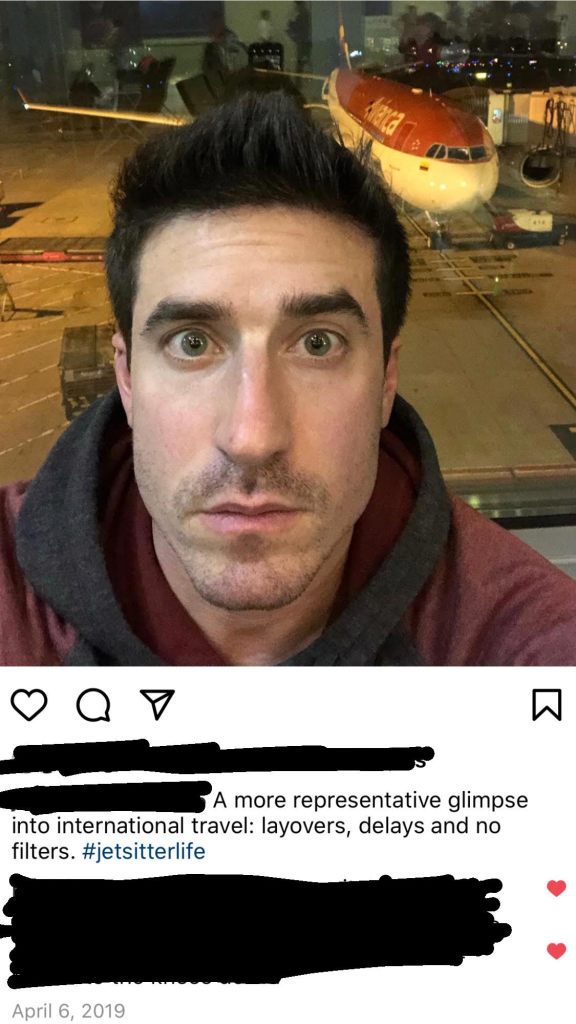
Professional Purpose
Throughout my career, I’ve tried to internalize this general idea: On my best days, I honestly believe there is no better career for me in the entire world. On the vast majority of other days, I love the work I get to do and am happy with my career choice. And on the other days? I have a relatively stable job, which is enough for a large part of the workforce. So when I felt burned out in April 2019, I started to really look internally more than I had done since I trusted my gut and went to China.
What helped me more than anything else was finding my professional purpose. Even on your bad days or your most challenging days, why are you happy with your career choice? Why do you push through and keep working when you are ready and able to call it a day? As university staffers, we’re generally not expected to work 50 hour weeks (or even less!).
No matter what type of university work you are doing, I think it is crucial to define your professional purpose. I know how much this has helped me over the last few years and I’m of course happy to help junior university employees think through theirs.
My Professional Purpose
My professional purpose is helping LL.M. students (primarily foreign-educated but now also U.S.-educated) & law students abroad achieve success in their U.S. legal studies in a system that is designed primarily for the benefit of J.D. students. As U.S. legal education faces its next big set of disruptions (it feels like it’s now happening every 3-5 years, which is a good thing), I truly hope that more people will actually question the whole purpose of J.D. accreditation/Non-J.D. acquiescence. From my vantage point, it seems like this question is one of the few in re-imagining legal education that people don’t want to touch. The good news is that this professional purpose has guided me and has helped me navigate my work with foreign-educated LL.M. students during a global pandemic.
I intend to cover this in more depth after completion of this series as I shift back to the “Beyond Non-J.D.” theme, but I highlight this so junior staffers can see what motivates me.
Handling the Difficult Days
Even with your professional purpose, it’s impossible to avoid all bad days. Junior level staffers work harder than they may be paid for in order to rise through the ranks (whether they feel it necessary to do more work or they are expected to do more work). For most starting out, the pay is not great. As higher education continues to shift, there are serious concerns about costs, sustainability, and pipelines for students and revenue. Law schools are not immune from those pressures. While it may appear we have low-stress jobs on the outside (“you’re not performing heart surgery/rocket science”), any professional setting requires careful navigation to thrive.
Having a professional purpose helps. Having supervisors who support you helps. Having a strong network to lean on helps. Understanding that other people are going through exactly what you’re going through helps. Junior staffers should not feel they’re going it alone. We all face challenges. Learning how to overcome them takes time (at least it did for me).
And that’s what prompted Part IV. It’s not always clear skies and smooth sailing. Just like our Instagram, Facebook, and Snapchat may be a carefully curated series of squares highlighting our personal wins, law school website stories, marketing brochures, and LinkedIn can feel the same on the professional side. In my early years, imposter syndrome would tell me that other programs were so much more comprehensive and I had no idea what I was doing when I saw what they were highlighting. It wasn’t until I saw behind the curtain from 7500 miles away that I truly internalized that I was in fact doing a really good job on the things that mattered to international students.
* * *
Part V will be the final chapter in this series. I’ll end with my move to Florida and advice as junior staffers contemplate and ultimately decide on the move from job #1 to job #2. Thank you to everyone who has followed along so far!
 Beyond Non-JD | by Joshua Alter
Leave a comment